No Star, No Problem: How Elite Coaches Turn Week-One Disasters Into Championship Runs
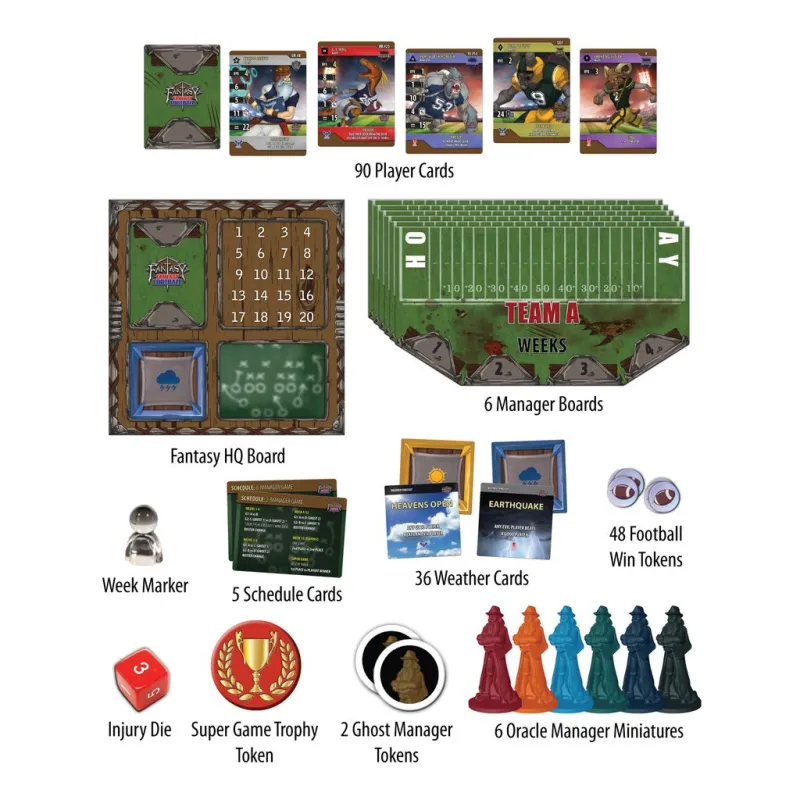
Photo: fantasy football tabletop game miniatures strategy board game tournament, via cf.geekdo-images.com
There's a specific kind of silence that falls over a Blood Bowl table when your star Blitzer eats a Mighty Blow on Turn 2 and doesn't get back up. The apothecary shrugs. The crowd jeers. Your opponent grins like they just solved the whole puzzle in one roll. And honestly? Sometimes they have.
But sometimes — and this is the part nobody talks about loudly enough — they've just made the biggest mistake of the tournament.
Across the US competitive scene, a quiet revolution in roster philosophy has been building for years. The coaches at the top of the standings aren't just building teams around elite players. They're building teams that eat the moment their elite player goes down. The injury isn't the disaster. The opponent's assumption that it is — that's the disaster.
The Illusion of the Indispensable Player
Every Blood Bowl roster has a headliner. The AG5 Gutter Runner who can dodge through a brick wall. The ST5 Black Orc who anchors every cage push. The Wardancer who makes opposing coaches sweat through their shirts on defense. These players earn their gold crowns, and they dominate opponent prep time.
That's also exactly why losing them early can flip the entire psychological dynamic of a tournament run.
"I've seen coaches completely unravel when their star goes down," says Marcus T., a veteran US open circuit regular who's been grinding tournaments from Chicago to Atlanta for the better part of a decade. "But I've also seen coaches almost relax when it happens. Like the pressure valve just released. Now nobody expects anything from them. And that's when they get dangerous."
The psychological shift is real, and the elite coaches have learned to manufacture it deliberately.
Building the Understudy Before You Need One
The roster construction philosophy that enables these comeback runs isn't accidental. It starts during team-building, not during crisis management.
Coaches who consistently perform well after early injuries share one common trait: they never build a roster where any single player is load-bearing in a way that can't be redistributed. That doesn't mean ignoring star players — it means designing skill packages and positional depth so that when the star exits stage left, two or three players can split the role without the whole offense grinding to a halt.
Take ball-handling as an obvious example. A single AG4 catcher with Sure Hands and Dodge is a beautiful thing. But a roster where that player is your only viable ball carrier? That's a liability waiting to be exploited by any coach worth their dice bag. The stronger build adds a secondary lineman with Sure Hands tucked quietly into the roster — nothing flashy, costs less gold, draws zero prep attention — who can step into the role without triggering a full strategic rebuild.
The same logic applies to threat projection. Your star Blitzer with Block, Dodge, and Tackle is terrifying. But if your roster has two other players who can credibly threaten the same pressure lanes, losing the star doesn't remove the threat — it just makes it harder to read.
Case Study: The Unexpected Pivot
At a mid-sized regional open held in the Southeast last year, one Human coach entered the bracket with a fairly standard setup — a skilled Thrower, two developed Blitzers, and a Catcher who'd been quietly stacking SPP for two seasons. By Round 2, one of those Blitzers was nursing a Niggling Injury and sat out the rest of the day.
Here's where it gets interesting. Rather than cramping his offensive formation to compensate, the coach leaned harder into a short-passing game he'd barely used in prior rounds — a game plan built around his Thrower and a pair of Linemen with Kick-Off Return and Catch who'd been largely invisible up to that point. Opponents had prepped against the Blitzer-led cage push. Nobody had prepped against a quick-release passing attack that could spread the ball wide before the defense could collapse.
He won the tournament. The Blitzer never played another snap.
"I'd always had that passing game in the back pocket," he said afterward. "I just never needed to use it. Losing [the Blitzer] forced me to stop leaning on what was comfortable and actually play the matchup."
The Opponent's Blind Spot
There's a tactical dimension here that goes beyond roster construction. When you lose a marquee player, your opponent often stops respecting your secondary threats. They've mentally won the game already. They're playing relaxed. They stop accounting for the plays you can still make because they're celebrating the play you can't.
Smart coaches exploit this ruthlessly. The threat that was previously invisible — the Goblin with Leap who never got a look because the star Troll was eating all the defensive attention, the Skaven Thrower who'd been playing a conservative ground game all tournament — suddenly has operating space it didn't before.
The injury roulette, as brutal as it is, occasionally spins in your favor in ways that have nothing to do with dice.
Practical Takeaways for US Tournament Coaches
If you're prepping for your next open and you want to build this kind of resilience into your roster, here's the condensed version:
Distribute your threat profile. No single player should represent more than 40% of your offensive output in any given game plan. If they do, you're one bad Armor roll away from a completely different team.
Develop your backups before you need them. SPP doesn't accumulate in a crisis. Your secondary ball carrier needs skills now, not after your star gets carted off.
Keep a secondary game plan mentally rehearsed. You don't need to use it every game. You need to be able to switch to it in Round 2 without panicking. Walk through it in your head before the tournament starts.
Let your opponent underestimate you. When the star goes down and your opponent visibly relaxes — let them. That's your opening.
The Mental Game Nobody Talks About
Ultimately, the coaches who turn week-one disasters into championship trophies aren't just tactically superior. They've done the mental work of accepting that Blood Bowl is a game of cascading uncertainty, and they've stopped treating their roster's best player as the plan rather than as a component of the plan.
The dice will eventually roll wrong. The Armor will break. The apothecary will shrug. And somewhere in a tournament hall from Phoenix to Pittsburgh, a coach will look at the carnage, take a breath, and quietly start executing Plan B — the one nobody in the room saw coming.
That's not bad luck. That's Blood Bowl. And the coaches who embrace it are the ones hoisting trophies at the end of the day.