Roll With It: How Championship Coaches Turn Dice Chaos Into Their Deadliest Weapon
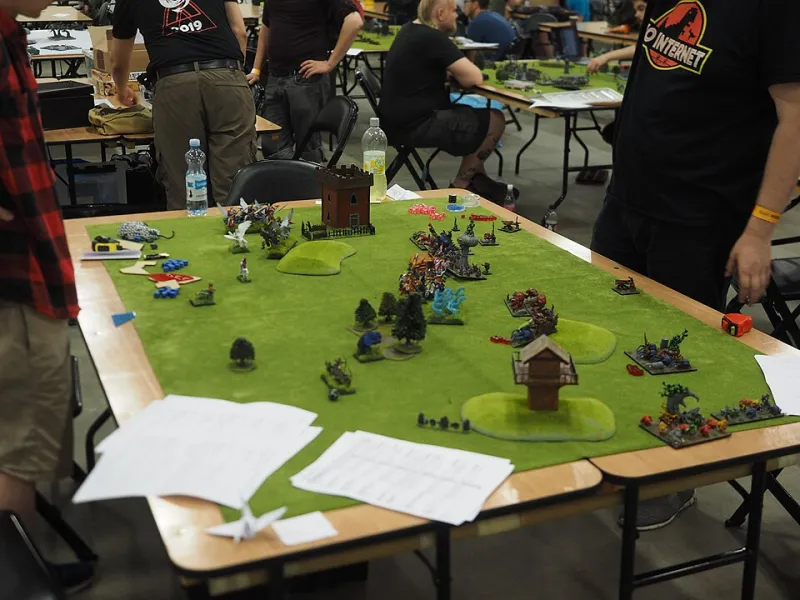
Photo: JIP, CC BY-SA 4.0, via Wikimedia Commons
There's a moment every Blood Bowl player knows. You're up by one touchdown with two turns left. You've got the ball safely caged, your opponent's team looks like it was assembled at a clearance sale, and all you need is one clean block to seal the deal. Then your star Blitzer rolls a double skull, your cage collapses like a wet paper bag, and somewhere across the table, your opponent is already doing a victory lap.
If your instinct at that moment is to blame the dice, according to some of the sharpest coaching minds on the US tournament circuit, you're already thinking about Blood Bowl the wrong way.
Chaos Isn't the Enemy — It's the Game
Blood Bowl, for the uninitiated, is a fantasy football tabletop game published by Games Workshop that blends gridiron strategy with the kind of unpredictable violence that would make an NFL commissioner faint. Every block, dodge, and pass is resolved with dice, and those dice — bless their chaotic little hearts — do not care about your feelings or your carefully laid plans.
But here's the thing: the coaches consistently hoisting trophies at major US tournaments like the NAF Championship and regional Blood Bowl Opens aren't the ones who somehow avoid bad rolls. They're the ones who've engineered their rosters, play-calling, and mental frameworks to profit from randomness rather than drown in it.
"People talk about luck like it's something that happens to you," says Marcus "The Goblin Whisperer" Delray, a two-time regional champion out of Austin, Texas who runs a notoriously chaotic Skaven squad. "I think of luck as something you create conditions for. If I put myself in enough situations where a lucky roll wins the game, eventually luck shows up to work."
That philosophy — creating volume opportunities for favorable outcomes — is arguably the most underrated concept in competitive Blood Bowl coaching.
The Math Behind the Madness
Let's get a little nerdy for a second, because the numbers actually back this up.
In Blood Bowl, most dice actions resolve on a 2+ or 3+ with a single d6, but the real drama lives in the block dice. A standard block gives you a range of outcomes from Both Down (bad) to Defender Stumbles (great), and the distribution shifts based on how many dice you're rolling and which player is swinging. Experienced coaches obsess over something called "dice efficiency" — essentially, how many of their actions in a given turn carry meaningful risk versus how many are near-certain.
The mistake mid-tier coaches make, according to Chicago-area veteran coach Priya Nambiar, is treating every turn like a puzzle to be solved perfectly. "They want to eliminate variance," she explains. "But you can't eliminate variance in Blood Bowl. What you can do is sequence your actions so that the risky stuff comes last, and by the time you're rolling the scary dice, you've already banked enough value that a bad result doesn't end your turn catastrophically."
This concept — action sequencing — is deceptively simple but brutally hard to execute under tournament pressure. Always complete your certain actions first. Move your ball carrier to safety before you attempt that 3-die block. Pick up the ball before you start throwing your fists around. It sounds obvious until you're forty-five minutes deep into a match and adrenaline is doing the coaching instead of you.
Building a Roster That Loves the Chaos
Beyond in-game decision-making, the chaos philosophy extends all the way to roster construction. Some team archetypes are inherently better at weaponizing randomness than others, and savvy coaches pick their roster with this in mind.
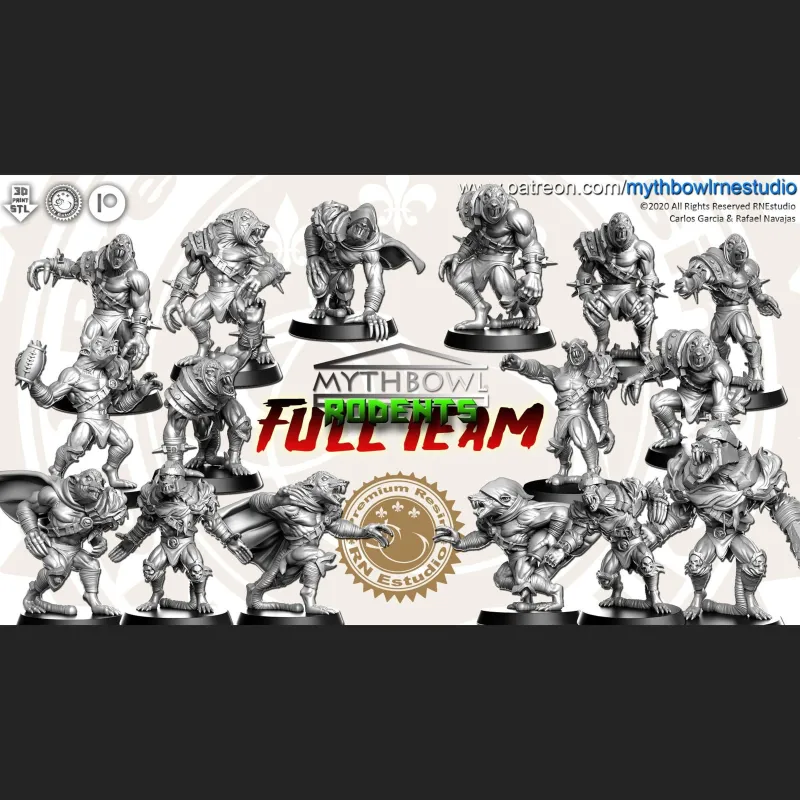
Skaven, for example, are a fan favorite on the US competitive circuit precisely because their breakneck movement speed turns every "lucky" dodge or sprint into a potential game-winning touchdown. Their fragility is almost beside the point — the goal isn't to survive, it's to score before the other team can exploit your weaknesses. High-elf teams operate on a similar principle, using their reliable agility to create multiple scoring threats and force opponents into reactive, risk-heavy blocks.
On the flip side, coaches who run Chaos Chosen or Nurgle rosters tend to embrace a different flavor of unpredictability — the kind where they're dishing out so many blocks per turn that even a string of average results still leaves the opponent's roster looking like a jigsaw puzzle with missing pieces.
"I run Chaos because I love the moment when my opponent realizes they've spent three turns planning against a threat that doesn't exist anymore," laughs Derek Fontaine, a Chaos Chosen specialist from the Pacific Northwest who placed top four at last year's NAF regional. "Every game is different. Every team development is different. That's not a bug — that's the whole appeal."
A Match Breakdown: Chaos in Action
At a 2024 regional qualifier in Denver, one of the most talked-about matches of the day featured a Goblin team — notoriously unreliable, stuffed with secret weapons and chainsaws — against a well-coached Dark Elf squad that was the heavy favorite on paper.
The Goblin coach, playing with nothing to lose, opened the second half by immediately deploying a Secret Weapon player, accepting the ejection would come at the end of the drive. The Dark Elf coach, suddenly facing a chainsaw on the pitch, was forced to abandon his planned blitz route and divert two players to neutralize the threat. That positional shift opened a lane the Goblin coach had been quietly setting up for two turns, and his Looney sprinted through for a tying score.
The Dark Elves ultimately won, but only by a single touchdown after extra attrition — a far cry from the blowout everyone expected. "That Goblin coach made me play scared for the entire second half," the Dark Elf coach admitted afterward. "He used chaos as a weapon, and it almost worked."
The Mental Game
Perhaps the most underappreciated dimension of the chaos philosophy is psychological. When you project genuine comfort with uncertainty — when your opponent can see you shrug off a double skull and immediately start calculating your next angle — it rattles them. Blood Bowl is a long game, and mental composure is as much a competitive resource as rerolls.
The coaches who win consistently aren't the ones who never feel the sting of a bad roll. They're the ones who've made peace with the fact that the dice are going to betray them, probably multiple times per game, and they've built both their roster and their mindset to absorb those moments and keep moving.
So next time the RNG gods decide to personally ruin your Tuesday night league game, don't rage at the dice. Ask yourself: did you build enough chaos opportunities to make luck want to find you? If not, that's your homework before next week's match.