Crunch Time Playbook: The Drive Sequences That Actually Win One-Score Blood Bowl Games
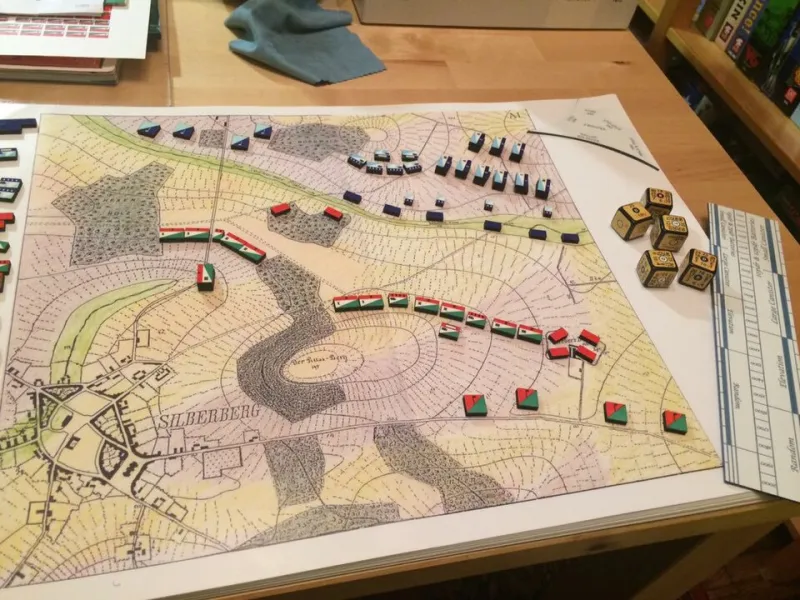
Photo: Matthew Kirschenbaum, CC BY-SA 4.0, via Wikimedia Commons
Forget everything you think you know about "safe" Blood Bowl. There's a specific kind of game — tied deep in the second half, crowd noise maxed out, both coaches sweating through their lucky dice bags — where conventional wisdom stops working and something stranger takes over. The coaches who win these games aren't necessarily the most talented. They're the most prepared. They've thought through the crunch-time decision tree before the crunch arrives, and when the moment comes, they execute like they've been there before.
Because they have.
We pulled game film from several recent US tournaments — including footage from the 2023 Midwest Carnage Cup and the Southeast Regional Smash Circuit — and sat down with coaches who've been on both ends of the one-score nail-biter. What we found was a set of recurring patterns, a kind of hidden grammar to clutch-moment decision making, that separates the coaches who close games from the ones who blow leads.
The First Principle: Winning the Clock Before You Win the Ball
The single most common mistake coaches make in close late-game situations is treating the scoreboard and the clock as separate problems. They're not. They're the same problem.
"Everyone knows you want to score," says Dallas-based coach Terrence "Slow Burn" Albright, a three-time Texas regional finalist. "But the question isn't if you score — it's when you score. Scoring too fast is almost as bad as not scoring at all."
Albright's preferred framework in one-score games is what he calls the "clock-first" decision tree: before every drive, he maps out the ideal scoring turn based on how many turns his opponent will have left to respond. In a game where he needs one TD to tie or take the lead, he'd rather score on Turn 7 of eight than Turn 4, even if Turn 4 is available.
This sounds obvious. It's not. Under pressure, coaches revert to scoring-as-fast-as-possible instincts, which opens up opponent comeback windows that a slightly slower drive would have closed entirely.
The High-Percentage Cage and When to Break It
The cage — that classic Blood Bowl formation where ball carriers are surrounded by blockers — is the backbone of most controlled late-game drives. But the game film tells a more nuanced story about when cages actually win close games versus when they become a liability.
Coaches who succeed in crunch time tend to use cages strategically rather than reflexively. Specifically, the film shows a recurring pattern: the cage works when your opponent has to come to you; it fails when your opponent can force you to move on their terms.
Against aggressive bash teams with high Strength values, a static cage invites the exact collision your opponent is built to win. The coaches who navigate this successfully tend to incorporate what analysts in the community have started calling "mobile cage" sequences — shifting the formation laterally to avoid the strongest blockers, sacrificing a turn of forward progress to preserve the ball carrier's safety.
It looks passive. It's actually deeply calculated.
"I'll take a turn going sideways if it means I get to choose my engagement angles on the next turn," says Portland-area coach Simone Vachon, who made waves at last year's Pacific Open with a methodical Lizardmen run that featured almost no straight-line drives in the final rounds. "Lateral movement isn't retreating. It's positioning."
The Blitz Decision: When to Pull the Trigger
One of the most analytically interesting patterns in close-game film is how top coaches use the Blitz action — the once-per-turn ability to move a player before blocking. In casual play, blitzes get used opportunistically, whenever a juicy target presents itself. In tournament crunch time, the pattern is different.
Elite coaches tend to save their blitz for the specific blocking sequence that opens the scoring lane, rather than spending it reactively. This sounds simple, but the discipline required to not use a blitz when a tempting target appears is genuinely hard to maintain under pressure.
"I watch a lot of coaches burn their blitz on Turn 5 to take out a linebacker who's mildly in the way," says Albright. "Then on Turn 6, when they need to clear a corner for the TD run, they've got nothing left. The blitz has one job in the final drive. Don't waste it."
The game film from the 2023 Midwest Carnage Cup semifinals backs this up strikingly. In four of the five closest games, the winning coach used their blitz specifically to clear the end zone-adjacent blocking assignment — not the most dangerous threat on the field, but the most relevant threat to the scoring play.
Reading the Opponent's Panic
Here's where the psychological dimension enters the analysis, and it's where close-game expertise gets genuinely hard to teach.
Opponents under pressure make mistakes. They overcommit to stopping your ball carrier, leaving gaps elsewhere. They burn rerolls early to prevent small setbacks, leaving themselves exposed when the big moment arrives. They blitz when they should cage, and cage when they should blitz.
The coaches who win the most one-score games aren't just executing their own plan — they're reading the opponent's deteriorating execution and adjusting in real time.
"When I see someone burn both rerolls before Turn 5 in a close game, I know I've got them," says Vachon. "Not because of the rerolls specifically, but because it tells me they're playing scared. Scared coaches make the second mistake faster than the first."
The film bears this out. In close games, the winning coach's drive sequences rarely look especially brilliant in isolation. What they look like is steady. Consistent decision quality, maintained under the exact conditions that cause opponent quality to drop.
The Dirty Secret of Clutch Performance
After reviewing hours of game film and talking to coaches who've made careers out of winning the games they shouldn't, one pattern stands above all the others: the coaches who win close games win them in the pregame, not the endgame.
They've already decided what their final drive looks like. They've already identified the blitz target. They've already mapped the clock. When Turn 6 of a tied game arrives, they're not problem-solving under pressure — they're executing a plan they made when the pressure was lower.
That's the real money play. Not a specific formation or a clever sequence. Preparation so thorough that crunch time just feels like regular time.
Easy to say. Brutally hard to do.
That's why it wins.