Triage on the Turf: How Top US Coaches Rebuild Rosters After Catastrophic Losses

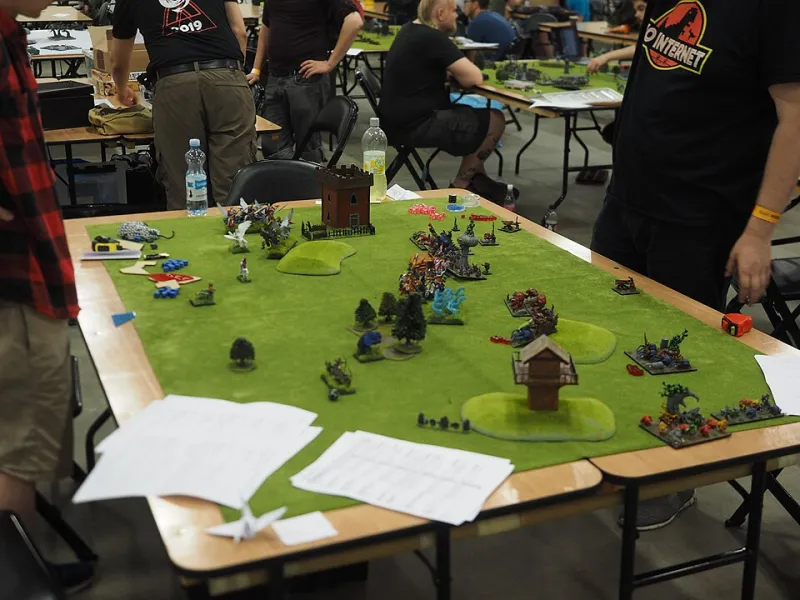
Photo: Islam90, CC BY-SA 4.0, via Wikimedia Commons
There's a moment every Blood Bowl coach knows. You've just watched your prize Wardancer — the one with Block, Dodge, and two seasons of earned skills — crumple under a double-skulls reroll that somehow still came up Both Down. The apothecary jogs out, shakes his head, and scribbles something in the ledger. Niggling injury. Your season just changed shape.
In a game where permanent damage is baked into the design, the coaches who consistently win US tournaments aren't just the ones with the best opening drives. They're the ones who've learned to think like field surgeons — triaging their rosters in real time, making cold-blooded decisions about who sits, who plays hurt, and which losses to absorb now so the team survives long enough to win later.
The Myth of the Irreplaceable Player
Ask Chicago-area tournament regular Marcus "The Mortician" Delray about his most painful career moment, and he won't hesitate. "I had a Dark Elf Runner — two levels deep, Sure Hands, Leap, working toward a third skill — who got a stat break on Turn 4 of a semifinal. Minus one Agility. Just gone." He pauses. "I kept playing her. That was the mistake."
Delray's mistake is one of the most common traps in Blood Bowl roster management: the sunk-cost fallacy applied to living (well, mostly living) players. Coaches pour development resources into star athletes and then refuse to bench them even when the math says otherwise, because pulling them feels like admitting the loss.
"The moment a player becomes a liability, they're not your star anymore," says Delray. "They're a trap."
Elite coaches treat every player as replaceable in principle, even when they're irreplaceable in practice. That mental flexibility — the willingness to mentally "write off" a damaged asset before the game forces your hand — is what separates reactive coaches from proactive ones.
Building the Injury Buffer
So how do you actually plan for attrition? The answer, according to multiple tournament veterans, starts well before the first kickoff.
Roster depth isn't a luxury — it's insurance. The coaches who consistently deep-run US league seasons tend to carry one or two "development" players at all times: cheaper positionals or linemen with enough skill investment to step into a featured role if something goes wrong. They're not your starters. They're your contingency.
Seattle-based coach Priya Okonkwo, who finished top four at the 2023 Pacific Northwest Open, puts it bluntly: "I budget for two deaths per season. Not because I'm pessimistic — because I'm realistic. If I haven't lost anyone by mid-season, I'm ahead of schedule. If I have, I'm not scrambling."
Okonkwo's approach involves tiered roster planning: a first-string unit built for peak performance, a second-string unit built for role-specific coverage, and a gold reserve specifically earmarked for emergency purchases. She calls it her "trauma fund."
The Rotation Decision Tree
When a key player goes down mid-campaign, coaches face a three-way decision that plays out faster than most people realize:
- Field the injured player anyway — accepting reduced performance in exchange for their remaining skills and experience.
- Bench them and promote a backup — absorbing a short-term skill gap in exchange for protecting long-term asset value.
- Cut them entirely — reclaiming the roster slot and salary cap space to pursue a replacement.
None of these options is universally correct. The right call depends on where you are in the season, what the player's injury actually costs you in practical terms, and what your schedule looks like going forward.
"A Niggling on a Blitzer hurts more in a heavy-hitting matchup than against an Elf team," notes Delray. "You have to read the context. Sometimes you play your wounded guy because the alternative is worse."
The key metric most experienced coaches use is expected turns played versus expected injury risk. A Niggling player rolling an extra injury die every time they take a hit isn't just a performance concern — they're a liability multiplier. Every hit they absorb carries compounded risk. In a long campaign, that math compounds brutally.
Rebuilding From Zero: The Phoenix Roster
Occasionally, the attrition gets ahead of you. A bad tournament run, a string of unlucky injury rolls, and suddenly you're looking at a roster that's been hollowed out. This is where long-term thinking becomes critical.
The coaches who rebuild successfully tend to follow what Okonkwo calls the "Phoenix Protocol": strip back to the core, identify your one or two surviving assets worth building around, and reconstruct the team's identity from there rather than trying to recreate what you lost.
"You can't rebuild a Dark Elf team by trying to replace your lost Wardancer with another Wardancer at the same skill level," she says. "That player took two seasons to develop. You don't have two seasons. You have to ask: what kind of team can I build right now with what I have?"
This often means embracing a transitional identity — a more conservative, grind-oriented playstyle while the new core develops, rather than forcing the high-risk plays that your depth no longer supports.
The Long Game
At its core, injury management in Blood Bowl is about accepting that the game is designed to hurt you, and deciding in advance how you're going to respond when it does. The coaches who panic, who cling to damaged assets, who fail to plan for attrition — they're the ones who make the quarterfinals once and then disappear.
The ones who keep showing up at US tournaments, season after season, deep-running campaigns that others write off? They've already done the math. They know who's expendable. They've got their trauma fund ready.
They've accepted, somewhere along the way, that good Blood Bowl isn't about protecting your players.
It's about deciding which losses you can afford.