Cursed by the Numbers: Why Your Injury Predictions Are Almost Always Wrong
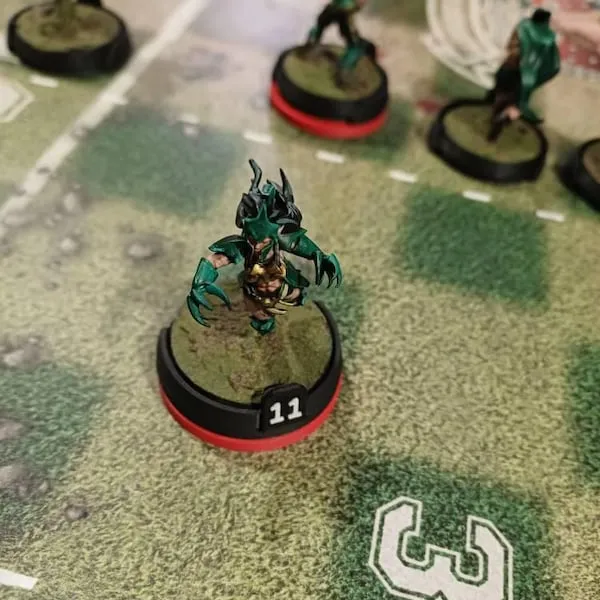
Photo: fantasy football tabletop game miniatures injury strategy, via i.etsystatic.com
There's a moment every Blood Bowl coach knows intimately. Your star Blitzer is surrounded by three opposing linemen, one of whom has Mighty Blow and the expression of a man who hasn't eaten in three days. You wince. You brace. You mentally calculate the cost of an Apothecary use before the dice even hit the table.
And then your Blitzer walks away without a scratch, while three turns later your untouched, nowhere-near-danger Thrower trips over his own cleats on a Go For It roll and ruptures something career-ending.
Welcome to the Injury Prediction Trap — and brother, you are not alone in falling into it.
The Conventional Wisdom Problem
Ask any seasoned coach which players are most at risk during a given drive, and you'll hear the same answers recycled endlessly: whoever is in the most tackle zones, whoever is being targeted by the opposing team's most skilled bashers, whoever is carrying the ball in a contested cage. The logic feels airtight. More exposure equals more danger, right?
Except the data from US tournament play over the past several seasons tells a stubbornly different story. When you actually track injury outcomes across hundreds of competitive games — not just casual kitchen-table sessions, but serious tournament environments where coaches are making optimal decisions — the correlation between "obviously at-risk positioning" and "actual injury" is shockingly weak.
Players in heavy tackle zone coverage do get hurt more often in absolute terms. But coaches over-protect these players so aggressively, burning rerolls and positioning resources to keep them safe, that the relative injury rate compared to supposedly "safe" players ends up far closer than anyone expects. Meanwhile, the players nobody is watching — the lineman blocking on the far side of the pitch, the catcher streaking downfield with no immediate threat — are quietly accumulating a disproportionate share of freak injuries.
The Spotlight Fallacy in Action
Coaches are essentially victims of attentional bias. When you're laser-focused on the dangerous tackle zone cluster in the middle of the pitch, you're not watching the edges. And the dice, in their infinite chaotic wisdom, do not care about your threat assessment.
Consider Go For It rolls. They're distributed across the entire pitch, not concentrated in the danger zones. A player making two GFI attempts to reach a scoring position on the far sideline has the same fundamental injury risk from a failed roll as anyone else — except nobody's mentally flagging that player as "vulnerable." The coach isn't burning resources to protect them. The Apothecary decision-making doesn't center on them.
Then the 1 comes up. Then another 1. And suddenly the player you never worried about is the one costing you the game.
US tournament data reflects this pattern repeatedly. Freak injuries — the ones that genuinely alter game outcomes — cluster around secondary actions more than primary combat. Failed dodges on players making "routine" escapes. Block dice on low-priority assists that suddenly produce a POW result nobody anticipated. The unglamorous mechanical actions that coaches execute on autopilot are statistically more dangerous than the dramatic confrontations that dominate pre-game anxiety.
What Actually Drives Injury Susceptibility
So if positioning and tackle zone exposure are weaker predictors than we think, what actually matters?
Cumulative action volume. The player who takes the most total actions per game — regardless of how dangerous any individual action looks — accumulates the most risk. Armor checks aren't just generated by blocks. Every dodge, every GFI, every push result that requires a follow-on action adds to the pile. The workhorse lineman who's technically "safe" but touching the ball, making assists, dodging out, and repositioning every single turn is quietly running up a tab.
Opponent skill asymmetry at unexpected positions. Coaches correctly fear the opposing team's designated basher. They frequently underestimate secondary players with skills like Tackle, Strip Ball, or even just a high Strength stat on what looks like a throwaway positional. These players get fewer "caution resources" allocated against them and end up causing outsized damage precisely because they're underestimated.
Fatigue in game structure. This one sounds almost too human for a tabletop game, but bear with it: injuries spike statistically in the second half of games, specifically during turns seven through nine. Coaches are making faster decisions, resources are depleted, and the mechanical discipline that protects players early in the game gets sloppy. The players who get hurt in these turns aren't the ones who were in danger during the opening drive — they're the ones caught by a slightly suboptimal positioning decision made in a hurry.
Roster composition pressure. Teams with thin benches force coaches to keep injured or exhausted players on the pitch longer and in riskier configurations. The injury susceptibility isn't intrinsic to those players — it's a structural consequence of roster construction decisions made weeks before game day.
The Strategic Recalibration
None of this means you should stop protecting your star Blitzer in heavy tackle zone coverage. That's still a real risk and ignoring it would be genuinely reckless. But the takeaway for competitive US coaches is that your injury mitigation strategy needs to expand beyond the obvious danger zones.
Start tracking action volume per player, not just threat exposure. The player taking eight actions a game is running more risk than the player taking three, even if those eight actions all look safe on the surface. Reroll allocation should weight cumulative exposure, not just dramatic moments.
Build contingency plans around your secondary players, not just your stars. When a tournament run falls apart, it's rarely because the star got hurt — everyone has backup plans for that. It falls apart because the "unimportant" Lineman who was quietly doing four jobs a turn is suddenly unavailable, and there's no coverage for what he was doing.
And in those second-half turns when the pressure is highest and the decisions are fastest? Slow down. The data says that's when the dice collect their debts.
Stop Playing the Odds You Think You're Playing
The cruelest thing about the Injury Prediction Trap is that it feels like wisdom. You've watched enough games, run enough rosters, and eaten enough bad luck that your instincts feel calibrated. They're not. They're pattern-matched to the dramatic moments that stick in memory — the brutal Mighty Blow on your best player — while systematically ignoring the quiet accumulation of risk happening everywhere else on the pitch.
The coaches consistently outperforming expectations in US tournament play aren't just better at reacting to injuries. They're better at distributing their protective resources across the whole roster, accounting for the unglamorous risks that never make the highlight reel.
The dice don't know who your star is. They don't care about your threat assessment. They're going to find the player you forgot to worry about.
Maybe start worrying about them first.