Lock It Down: The Three Defensive Setups Shutting Out Opponents Across the US Tournament Scene
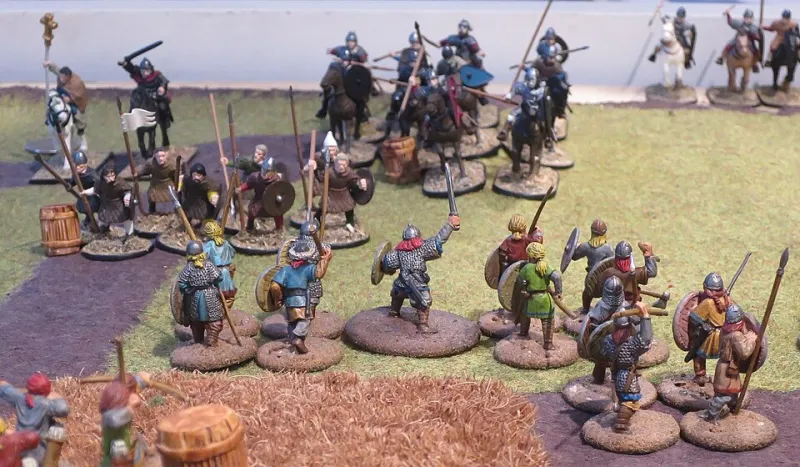
Photo: MagHoxpox, CC BY-SA 4.0, via Wikimedia Commons
Blood Bowl content on the internet has a scoring obsession. Cage-busting combos, deep-throw setups, two-turn touchdowns — everyone wants to talk about putting points on the board. And look, we get it. Scoring is fun. Scoring is exciting. Scoring is the thing your opponent immediately posts about on Reddit when it happens to them.
But here's what the tournament standings actually tell us: the coaches consistently finishing in the top cuts at major US events aren't the ones with the flashiest offenses. They're the ones who've figured out how to make their opponents absolutely miserable on defense.
In 2024, three distinct defensive formations have risen to the top of competitive US Blood Bowl play. They each operate on different principles, reward different skill sets, and punish different offensive approaches. Here's what they are, who's using them, and — crucially — why you should probably steal at least one of them immediately.
Formation One: The Curtain — Pressure Defense Built for Disruption
If the Curtain had a theme song, it'd be something aggressive and slightly chaotic. This is the defensive setup favored by coaches who'd rather cause problems than prevent them — a forward-pressure alignment designed to collapse the opponent's setup before they can establish any meaningful structure.
The core concept is straightforward: deploy your most mobile players in a wide, shallow line across the midfield zone while keeping one or two hard-hitting enforcers positioned to blitz through any gap that opens. The goal isn't containment — it's disruption. Force the ball carrier to move laterally. Deny them the time to build a protective cage. Make every turn feel like a fire drill.
Who's running it: Coaches fielding Skaven, Norse, and certain Elf builds have embraced the Curtain enthusiastically in 2024. At the Pacific Coast Carnage tournament in the spring, three of the top-eight finishers were running Curtain variants on defense, with two of them specifically crediting it for shutting down heavy cage-based offenses that had dominated their regional metas.
Strengths: Devastatingly effective against slow, methodical offenses that rely on building structure over multiple turns. The pressure forces mistakes, and mistakes in Blood Bowl cascade badly.
Weaknesses: Burn a few key re-rolls early and the Curtain collapses on itself. It also struggles against teams with exceptional Dodge ratings — all that beautiful pressure just bounces off a well-skilled Elf backfield.
Deploy it when: Your opponent is running a heavy-bash team that needs time to set up. Dwarf coaches in particular absolutely hate seeing the Curtain because their entire defensive scheme assumes they can dictate tempo. Don't let them.
Formation Two: The Anvil — The Wall That Refuses to Move
If the Curtain is aggressive chaos, the Anvil is its philosophical opposite. This formation is built on a single beautiful premise: make it geometrically impossible for your opponent to score without first dismantling your defense piece by piece.
The Anvil deploys a dense central cluster of high-Strength, high-Block players anchoring the middle of the pitch while flanking players seal the sidelines. The objective isn't to blitz the ball carrier — it's to force them into a corridor where your heaviest hitters can work systematically. Think of it less like a defensive play and more like slowly closing a very uncomfortable door.
Who's running it: Dwarf and Chaos Dwarf coaches have been the Anvil's most devoted practitioners for years, but 2024 has seen a surge of adoption among Human and Orc coaches who've tooled their rosters specifically around Guard and Stand Firm skill stacks. At the Texas Thunderdome Invitational this fall, the Anvil helped a Human team coach by veteran player Marcus Delaney — a name well-known in the Southwest regional circuit — grind through three consecutive Agility-based opponents by simply refusing to let the ball move forward.
Strengths: Psychologically devastating. Opponents who expected to score in six turns suddenly find themselves on turn fourteen with no path forward and a growing casualty problem. The Anvil wins games not by doing anything spectacular but by doing nothing wrong.
Weaknesses: Speed is its nemesis. Fast ball carriers who can bounce off the outer edges of the formation before the wall can react will find gaps. The Anvil also requires significant investment in specific skills, meaning it's a long-term roster build rather than an immediate pickup.
Deploy it when: You're facing a high-scoring Agility team that wants to play fast and loose. Slow them down. Make them feel every inch of that pitch. By the time they've fought through your formation, they'll have spent more re-rolls than they budgeted for and your offense gets the field position advantage.
Formation Three: The Shadow — Reactive Defense for the Chess Players
The newest entry in the 2024 meta conversation is also the most nuanced, and frankly, the most fun to watch when it's executed well. The Shadow isn't a fixed formation so much as a philosophy of adaptive positioning — your defense mirrors the opponent's setup, adjusting in real time based on where they're committing their ball carrier and where their key blocks are developing.
Instead of establishing a predetermined structure, Shadow coaches spend the first couple of turns reading the offensive setup before committing their defensive alignment. It requires more decision-making per turn than either the Curtain or the Anvil, but the payoff is a defense that never gives the opponent a clean read on your intentions.
Who's running it: This one skews heavily toward experienced coaches with significant tournament reps — the kind of players who've seen enough offensive schemes that they can diagnose what's coming within one or two turns. The Midwest Blood Bowl Championship saw multiple Shadow practitioners in the top bracket, including one Wood Elf coach who used it to neutralize three different offensive archetypes across six rounds by essentially never showing the same defensive face twice.
Strengths: Opponents cannot prepare for it. Every pre-game plan they've built assumes some predictability in your defensive alignment. The Shadow eliminates that. It's also remarkably effective against coaches who rely on a single offensive concept — once you've identified their scheme, you can shadow it into oblivion.
Weaknesses: You. This formation's biggest vulnerability is the coach running it. Misread the opponent's setup once and you've left a flank exposed at the worst possible moment. The Shadow rewards experience and punishes hesitation equally.
Deploy it when: You're facing a coach you've played before, or when you've scouted their tendencies and want to exploit a specific pattern. It's also a strong choice in tournament finals where your opponent has had the same opportunity to scout you — the Shadow makes that scouting data far less useful.
The Bottom Line
Defense in Blood Bowl isn't the unsexy cousin of offense. It's the architecture of victory — the framework that keeps your opponent's best plays from ever fully developing. The coaches dominating US tournaments in 2024 haven't just learned to score. They've learned to make scoring feel like an unsolvable problem for anyone standing across the pitch.
Pick your formation. Build your roster around it. And the next time someone asks why you're not running a flashy offensive scheme, point them to your record.
The scoreboard will explain the rest.