Box It Up: Why the Cage Is Both Blood Bowl's Most Beloved Formation and Its Biggest Trap
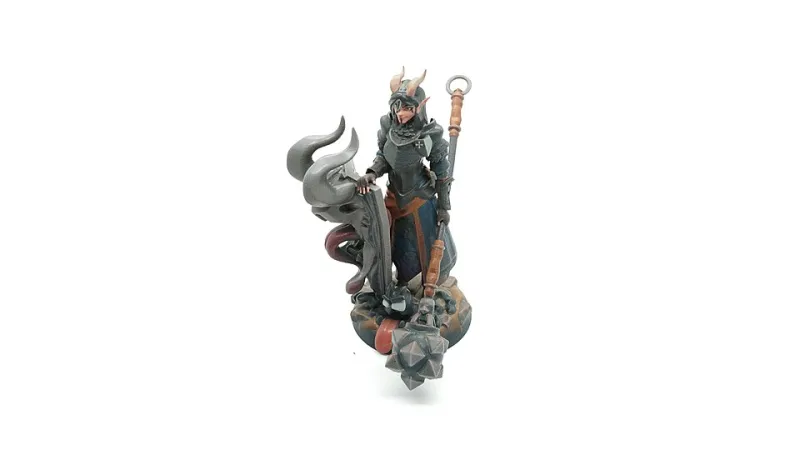
Photo: ScottHShapeways, CC BY-SA 4.0, via Wikimedia Commons
Ask ten Blood Bowl coaches to define the cage and you'll get eleven answers, at least two arguments, and one guy who insists he "doesn't run a cage, he runs a structured escort formation" before describing something that is absolutely a cage.
The cage — that classic diamond of blockers surrounding a ball carrier, designed to march down the field while daring opponents to crack it open — is probably the most fundamental formation in competitive Blood Bowl. It's also, if you ask the growing contingent of US tournament coaches who've built entire game plans around countering it, increasingly predictable, exploitable, and overrated.
So which is it? Cornerstone or crutch? The answer, as with most things in Blood Bowl, is "frustratingly both, depending on who's running it."
The Classic Cage: Why It Still Works
Before we start poking holes in the formation, let's be clear about why the cage became dominant in the first place. The geometry is elegant: a ball carrier surrounded on four diagonal corners by blockers creates a structure where any opponent wanting to reach the ball carrier must first either knock down a blocker or navigate through tackle zones that stack in punishing ways. Done correctly, the cage turns your ball carrier into a moving fortress that opponents have to dismantle piece by piece while you grind down the clock.
For slower, more powerful teams — your Orcs, your Chaos Chosen, your Dwarfs — the cage is less a tactical choice and more a fundamental identity. These teams aren't winning footraces. They're winning attrition battles, and the cage is the vehicle through which that attrition gets applied.
"The cage rewards patience," explains a Chaos Dwarf coach from the Texas regional circuit who's been running the formation to top-four finishes for two consecutive seasons. "You're not trying to score fast. You're trying to score when you decide to score, and the cage gives you control over that timeline in a way that almost nothing else does."
Where the Cracks Appear
Here's the problem: everyone knows the cage is coming. Experienced opponents don't just know how to break a cage — they've been practicing it since their first tournament loss to one. The formation's predictability is its greatest structural weakness, and US competitive coaches have gotten very good at building teams specifically designed to exploit it.
The most common cage-cracking approach in the current meta involves what coaches have started calling "corner pressure" — targeting a single cage corner with multiple players to force a defensive reposition, then using the resulting gap to either get a ball carrier into a hitting position or, in some cases, to simply burn so many of the cage team's actions that they can't maintain formation integrity while also advancing.
Blitz-capable teams with high Movement scores are particularly brutal against traditional cages. A Skaven or Wood Elf opponent can apply diagonal pressure that forces cage teams into reactive positioning, and reactive positioning is how cages collapse. The moment you're repositioning instead of advancing, the cage has stopped being an offensive weapon and started being a defensive liability.
The Unconventional Variations Turning Heads
What's genuinely interesting in the current US scene isn't the teams running textbook cages — it's the coaches who've started mutating the formation into something that preserves its core strengths while shedding its predictability.
The Loose Cage: Rather than tight corner positioning, some coaches are running blockers at extended range from the ball carrier, creating a larger footprint that's harder to corner-pressure but requires more movement to maintain. The tradeoff is that a loose cage is more vulnerable to fast players getting inside the formation, which means it tends to work better for teams with high-Strength blockers who can punish anyone who gets too close.
The Asymmetric Cage: Instead of a balanced diamond, certain coaches — particularly those running teams with mixed positional profiles — are building lopsided formations that concentrate blocking strength on the side facing the most pressure. It looks wrong on paper, but a couple of coaches running this approach in the Midwest regional scene have had real success against opponents who've memorized the standard cage-cracking playbook. "They're looking for the corner to hit," one coach explained, "and when the corner they expect isn't there, it takes them a turn or two to recalibrate. In Blood Bowl, a turn or two is everything."
The Cage-and-Release: Perhaps the most aggressive variation, this approach uses the cage as a deliberate feint — building a formation that draws defensive attention and commitment, then abandoning it to spring a ball carrier on a fast scoring route when the opponent overcommits to breaking the cage. It requires a very specific roster build (you need both the muscle to make the cage credible and the speed to exploit the release) and it fails badly when opponents don't take the bait. But when it works, it's genuinely demoralizing to play against.
The Counter-Cage Arms Race
For every cage innovation, there's a corresponding counter developing in the US tournament scene. Coaches who've committed to cage-busting strategies are increasingly building rosters with overlapping skill sets designed to address multiple cage variations simultaneously.
Dive Tackle — a skill that makes it harder for players to leave tackle zones — has seen a notable uptick in US tournament builds specifically because it complicates the ball carrier extraction that makes the cage-and-release work. Strip Ball remains the premier anti-cage skill for obvious reasons. And the rise of Frenzy on certain positionals gives cage-busting teams a way to chain-push blockers out of position in ways that feel almost unfair when they go right.
"I think we're in a genuinely interesting moment for cage play," says a veteran coach from the Pacific Northwest who's been running a Wood Elf roster to consistent top-eight finishes. "The coaches who are still running the exact same cage they learned five years ago are getting eaten alive. But the coaches who've adapted — who understand why the cage works and are building formations around that principle rather than just copying the shape — those coaches are still winning with it."
The Bottom Line
The cage isn't dying. It's evolving, the way any dominant formation evolves when the competition catches up — by forcing its practitioners to understand it more deeply, adapt it more creatively, and deploy it more intelligently.
What the current US competitive moment is actually revealing is a distinction between coaches who run the cage because they learned it and coaches who run the cage because they understand it. The former group is struggling. The latter group is winning, reinventing, and occasionally running something that looks suspiciously like a structured escort formation.
Whatever you want to call it, the box is still very much in business.