Second String Saviors: How Smart Coaches Build Benches That Win Championships
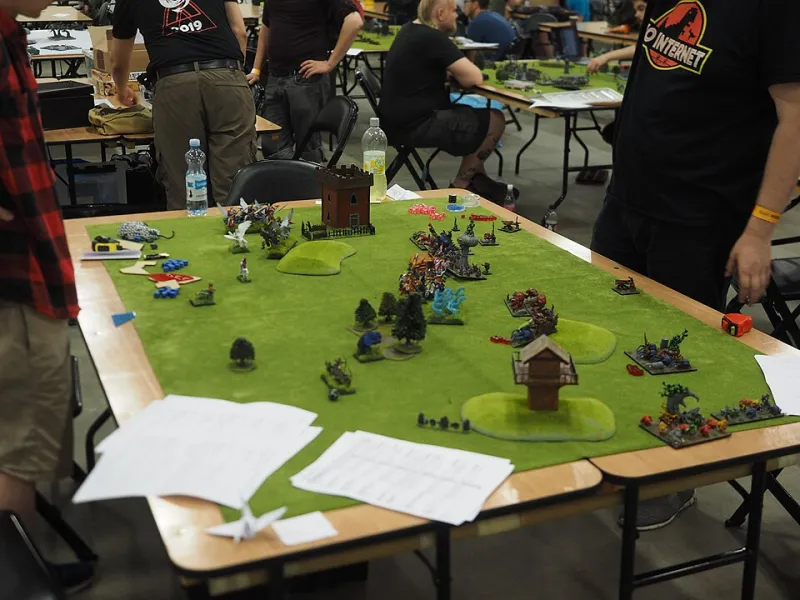
Photo: Jakobolof, CC BY-SA 4.0, via Wikimedia Commons
Let's paint a picture you know all too well. It's round three of a major US regional tournament. Your star Blitzer — the one with Block, Dodge, and two seasons of carefully accumulated skills — takes a high-side armor roll on turn four and exits the pitch horizontally. The crowd winces. Your opponent grins. And you? You're staring at your dugout like it's a stranger's refrigerator, hoping something useful turns up.
This is the moment the game is actually decided. Not by your starting lineup. By whoever you've got warming the metaphorical bench.
Top-tier Blood Bowl coaches across the US have known this for years, and the rest of the community is finally catching up. Building a deep, functional reserve roster isn't glamorous. It won't earn you likes on the community Discord. But it will absolutely save your season when the dice decide to become your enemy — which, as we all know, they will.
Why Your Starters Are Already Living on Borrowed Time
Blood Bowl is a game that punishes attachment. The moment you fall in love with a player, the Chaos Gods schedule their retirement. Experienced coaches don't plan around casualties — they plan for them, the same way a sensible person in tornado country doesn't wonder if they'll need the basement. They just keep the basement stocked.
The math is brutal and beautiful in equal measure. In a standard 11-player team running without any reserve depth, a single bad half can leave you fielding eight or nine players — sometimes fewer — while your opponent runs a full side. That's not a disadvantage; that's a surrender you signed up for voluntarily.
The fix isn't complicated, but it does require a shift in how you allocate your treasury during team-building. Instead of dumping gold into a third star player or an expensive positional re-roll, consider what two or three competent linemen on standby actually buys you: insurance, flexibility, and the ability to keep your opponent guessing about your depth.
The Tiered Bench: A Framework That Actually Works
Not all bench players are created equal, and the best US coaches treat their reserves as a tiered system rather than a pile of warm bodies.
Tier One: The Emergency Starter. This is your most developed reserve — ideally a player who's earned at least one skill and can slot into a critical position without the whole scheme falling apart. Think of this player as your backup quarterback in the NFL sense: not quite the star, but capable of executing the game plan if called upon. At major events like the Blood Bowl Brawl circuit or regional NAF-affiliated tournaments, coaches who invest in a genuine Tier One backup consistently outperform those who don't across multi-round events simply because they absorb attrition better.
Tier Two: The Positional Plug. These are players with baseline competence in a specific role — a spare Thrower who can at least catch and hand off, or a second Blitzer who won't embarrass you in a scrum. They're not flashy, but they prevent the specific nightmare of losing your only player at a key position with three turns left in the half.
Tier Three: The Lineman Wall. Yes, basic linemen. Unglamorous, frequently disrespected, and absolutely essential. A well-timed substitution of a fresh lineman into a blocking position can maintain cage integrity or free up a more skilled player for a downfield assignment. Don't sleep on these folks. They've won more games than their stats suggest.
Real Talk from the Tournament Floor
At the 2024 Great Lakes Gridiron Invitational — a tournament that drew some of the sharpest coaches in the Midwest — one of the most talked-about performances came from a Dwarf team that lost its Troll Slayer in round one and still finished in the top four. How? The coach had built what he called his "ugly depth" — a second-tier Blitzer with Guard and a couple of linemen carrying Block. Nothing spectacular. Just reliable pieces that could absorb the defensive workload when his stars went down.
His post-event interview was illuminating: "Everyone wants the highlight reel player. I want the player who's still standing in turn sixteen."
Contrast that with the Skaven coach at the same event who built an explosive starting lineup but carried only one reserve. By game three, he was fielding seven players and essentially conceding territory. His starters were phenomenal. His bench was a ghost town.
Treasury Management: Building Depth Without Going Broke
Here's where coaches tie themselves in knots. Yes, reserve players cost gold. Yes, that gold could go toward a star player, an Apothecary, or extra re-rolls. But the math tends to favor depth more than coaches admit.
A few practical guidelines that experienced US coaches swear by:
- Buy cheap positionals early. A 0-skill lineman costs a fraction of a developed positional and fills the same emergency role in a pinch. Skill them up over time with match experience.
- Prioritize the Apothecary alongside bench depth, not instead of it. The Apo saves one player per game. The bench saves your entire strategy when the Apo fails.
- Resist the temptation to spend winnings immediately on star upgrades. Bank at least one game's winnings as a reserve fund for emergency replacements after a brutal match.
- In league play, rotate. Getting bench players match time isn't charity — it's development. A reserve with two skills is infinitely more valuable than a reserve with zero.
Substitution as Strategy, Not Desperation
The most advanced concept in bench management isn't about replacing injured players — it's about choosing to substitute healthy ones. Fresh legs matter in Blood Bowl just as they do in actual football. A player who's been in a grinding scrum for six turns may be tactically better served on the sideline while a rested reserve takes that blocking assignment.
This kind of proactive rotation is rare at the casual level but increasingly common among top US tournament coaches. It forces opponents to track more variables, disrupts their read on your positioning, and keeps your primary threats available for the moments that actually decide the game.
The bench isn't your backup plan. For the coaches consistently making deep runs in US Blood Bowl tournaments, it's the plan — built quietly, managed deliberately, and deployed at exactly the right moment.
Stock it accordingly.