Garbage Time Heroes: Why the Cheapest Bodies on Your Roster Are Quietly Deciding 2024 Championships

Photo: underdog athlete bench player sports team celebration, via img.freepik.com
Let's be honest. Nobody drafts a Journeyman and thinks, this is my guy. You grab one because your star Blitzer is sitting in a neck brace made of wood and wishful thinking, and you need a warm body to fill out the eleven. He's the guy you apologize for in pre-game chat. He's the human equivalent of a gas station burrito — you're not proud of it, but sometimes it gets the job done in a pinch.
Except in 2024, the gas station burrito has been winning Michelin stars.
Across US regional leagues and major tournament circuits this year, Journeymen players — those nameless, skillless mercenaries you hire for a single game at rock-bottom cost — have been quietly delivering performances that are reshaping how top-level coaches think about roster depth, matchup exploitation, and the entire philosophy of "good enough."
What the Numbers Actually Say
Scrape through the tournament data from the past twelve months and a pattern emerges that nobody predicted. Journeymen are registering meaningful contributions — blocks, assists, and the occasional jaw-dropping casualty — at rates that are statistically hard to dismiss as pure variance. In several documented cases from mid-season regional events in the Midwest and Southeast circuits, coaches running skeleton rosters due to injury crises leaned heavily on Journeymen fills, only to find those placeholder players outperforming the sidelined veterans they were replacing.
Now, before anyone starts printing Journeyman jerseys, there's important context here. These aren't players developing skills or building SPP. They show up, they do a job, and they vanish. What's changed isn't the players themselves — it's how coaches are using them.
The Archetype Breakdown
Not all Journeymen are created equal, and 2024 has taught us to think about them in terms of archetypes rather than as a single interchangeable unit.
The Human Lineman Fill-In is the most common and, frankly, the most underestimated. At base stats, he's nothing. But in a defensive line role where his job is simply to not fall over and occupy space, he's shockingly competent. Smart coaches have been deploying these guys as sacrificial roadblocks — intentional targets designed to absorb blocks and free up skilled positionals to operate in cleaner space. It sounds cynical because it is, but it's working.
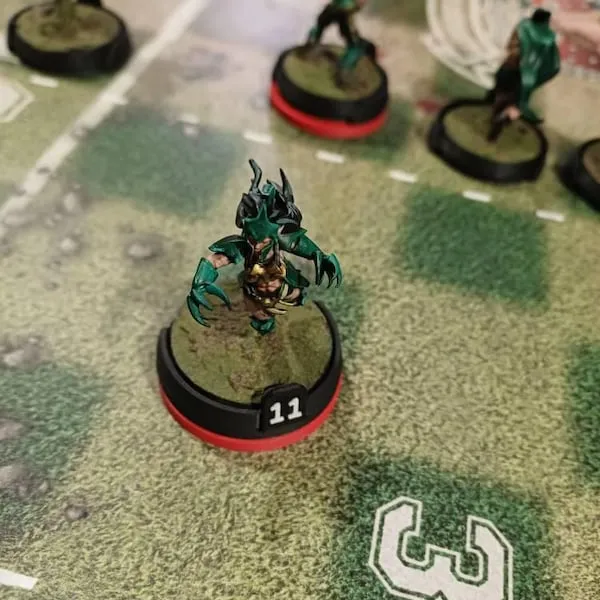
The Skaven Journeyman is where things get genuinely weird. A few coaches running depleted Skaven rosters in 2024 reported that their Journeyman Linemen, placed in low-accountability positions near the flanks, ended up in scoring positions due to opponent miscalculations. The Skaven's raw movement stat means even a no-skill body can threaten the endzone if the field opens up. Two documented Journeyman touchdowns in tournament play this year came from exactly this scenario. The internet lost its mind both times.
The Orc Journeyman Black Orc Fill-In is perhaps the most brutally effective archetype in pure blocking terms. Coaches running Orc rosters who suffered early positional casualties found that plugging a Journeyman into a blocking role on a cage wall was barely a downgrade from a low-SPP Black Orc. The base Strength value does enough heavy lifting that the absence of skills is less punishing than it would be elsewhere.
The Coaching Innovation Nobody's Talking About
Here's the part that actually matters for your game plan. The coaches getting the most out of Journeymen in 2024 aren't just plugging holes — they're actively scheming around them.
The emerging philosophy is what some coaches in the community have started calling "liability inversion." Instead of hiding your Journeymen and hoping opponents ignore them, you place them in positions that force opponents to make decisions about them. Do you commit a block to remove this guy, knowing he's replaceable and you're burning actions? Or do you ignore him and risk that 8% chance he ends up relevant?
It's a form of table-space manipulation that costs almost nothing. You're essentially buying decision fatigue in your opponent for the price of a roster slot.
Several coaches at the 2024 regional championship level have started factoring Journeyman placement into their pre-drive setup routines rather than treating it as an afterthought. That mental shift — from "where do I hide this liability" to "how do I weaponize this liability" — is the actual innovation driving the numbers.
Is Any of This Sustainable?
Short answer: sort of.
The success of Journeymen in 2024 is real, but it's also deeply contextual. Most of the standout performances are tied to specific conditions — depleted rosters creating favorable positioning accidents, opponents underestimating fill-in threats, or coaching innovations that exploit table-space dynamics in ways the meta hasn't fully adjusted to yet.
Once the broader community fully internalizes the liability inversion concept, opponents will start accounting for Journeyman placement in their defensive reads. The window of genuine strategic surprise is probably narrowing.
There's also the raw probability problem. Journeymen lack the skills to convert marginal situations consistently. The touchdown stories are real, but they're also the memorable exceptions to a much larger dataset of Journeymen who got knocked down in turn two and never got back up. Survivorship bias is doing some heavy lifting in the hype cycle right now.
That said, the core insight — that a no-cost roster body has more strategic value than coaches historically assigned to it — seems durable. Even if opponents adjust to specific schemes, the fundamental table-space math doesn't change. You're still buying actions and forcing decisions for nearly nothing.
What This Means for Your Roster Strategy
If you're heading into a tournament this fall with injury concerns (and who isn't, because Blood Bowl is a dice game played by sadists), here's the practical takeaway.
Stop treating Journeyman slots as a failure state. They're a resource. Map out pre-game where your Journeymen can generate the most opponent hesitation rather than where they'll cause you the least embarrassment. In cage-heavy setups, a Journeyman on the weak-side corner isn't dead weight — he's a question your opponent has to answer.
Also, keep your expectations calibrated. Your Journeyman is not going to win you the game. But in a sport defined by razor-thin margins and dice that hate everyone equally, a player who forces one extra decision, occupies one extra threat zone, or absorbs one block that would've hit your star carrier? That player is worth more than zero. And in 2024, the coaches who figured that out first are the ones hoisting trophies.
The bench uprising is real. It's weird. And it's making everyone rethink what "good enough" actually means on the Blood Bowl pitch.